whispers in the corridors
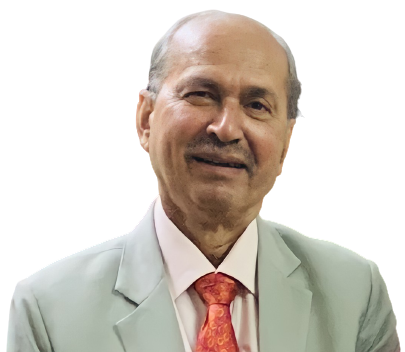








(1).png) Project D.R.E.A.M. (Dedicated Rooms for Empowerment, Awareness and Motivation) is an innovative initiative undertaken by Zilla Parishad Nagpur under the guidance of IAS Vinayak Mahamuni,a 2021 batch officer to strengthen rural education by transforming underutilised government buildings into modern, accessible and inclusive community libraries. The core objective of the project is to ensure that students in rural areas have access to quality learning spaces, digital resources and a motivating environment within their own villages, without the need to travel long distances.
Project D.R.E.A.M. (Dedicated Rooms for Empowerment, Awareness and Motivation) is an innovative initiative undertaken by Zilla Parishad Nagpur under the guidance of IAS Vinayak Mahamuni,a 2021 batch officer to strengthen rural education by transforming underutilised government buildings into modern, accessible and inclusive community libraries. The core objective of the project is to ensure that students in rural areas have access to quality learning spaces, digital resources and a motivating environment within their own villages, without the need to travel long distances.
The project began with the identification of nearly 150 underutilised or unused government buildings across rural Nagpur, including structures like Samaj Bhavans and other public spaces that were either vacant or in deteriorating condition. A detailed consultation process was then initiated with Sarpanch and village representatives. Based on their willingness and alignment with the vision, 100 locations were finalised for conversion into D.R.E.A.M. Rooms.

Speaking about the inspiration behind the project ,he quoted “It started during village visits, where I saw unused government buildings while students struggled to find even a quiet place to study. That contrast inspired the idea of turning these empty spaces into places of hope. DREAM stands for Dedicated Room for Empowerment, Awareness and Motivation, but for me it means giving every child a fair chance.”
.png)
A key highlight of the project is its unique and participatory approach to planning. Instead of following a standard design, Zilla Parishad Nagpur conducted large-scale essay writing and drawing competitions across schools and colleges. Students were asked to share their vision of a “dream library” through topics such as My Dream Library and A Day in the Life of a Librarian. In addition to this, postcard-based feedback was also collected. These inputs were systematically analysed to understand the actual needs, preferences, and expectations of students. This data-driven approach ensured that the libraries were designed in a way that truly reflects user demand.
Following this, detailed on-ground surveys were conducted at each selected location to assess repair and renovation requirements, including flooring, painting, lighting, and structural improvements. Civil work was then undertaken to convert these spaces into fully functional libraries.
Each D.R.E.A.M. Room is equipped with a comprehensive set of resources. This includes a curated collection of around 700 books covering fiction, non-fiction, children’s literature, and competitive examination materials in Hindi, English, and Marathi. The selection has been done in a way that caters to all age groups, from young children to elderly readers. In addition, the libraries are equipped with a 43-inch smart television, two modern computers, internet connectivity, STEM kits, magazines, proper furniture, inverter backup, and CCTV cameras to ensure safety and usability.
To ensure sustainability and smooth functioning, a Village Library Committee (VLC) has been formed in every village with the Sarpanch as chairperson and active participation from teachers, students, and community members. The VLC manages day-to-day operations and submits monthly reports regarding usage, maintenance, and requirements to the Block Development Officer.
A detailed library manual has also been provided to each village. This manual includes guidelines and innovative ideas on how to effectively utilise the space and resources. For example, the smart TV can be used for conducting virtual workshops, debate competitions, and awareness sessions across multiple villages simultaneously. Students can watch educational videos, solve mock tests, and participate in group learning activities. CM Fellow Vedant Pathak also contributed creative inputs to make the libraries more student-friendly.
The impact of Project D.R.E.A.M. has been significant, with students gaining access to peaceful study spaces, digital resources, and better learning opportunities within their villages. The libraries are being actively used by all age groups, encouraging reading habits among children, supporting youth preparing for exams, and engaging elderly citizens through books and newspapers.
Women are also increasingly using these safe community spaces to access information on government schemes and services. Beyond libraries, the D.R.E.A.M. Rooms have evolved into centres for workshops, discussions, and awareness programmes.
Sharing his long-term vision for the initiative, Mahamuni said, “My vision is that these libraries become spaces where rural youth sit with confidence, dream without hesitation and believe that their future can be bigger than their circumstances.”
Overall, the initiative stands as a strong example of how participatory planning, effective use of public infrastructure, and digital integration can create sustainable and inclusive rural learning ecosystems.
Send Feedback
- Members of SPS in Haryana promoted as IAS (UPDATED)
- Two IPS officers shifted in Tamil Nadu (UPDATED)
- Nine senior IPS officers get new assignments in UP (UPDATED)
- Prashant Kumar is also Addl Secretary, Revenue and Land Reforms in Bihar (UPDATED)
- Virender Singh appointed as Municipal Commissioner, Ambala, Haryana (UPDATED)
- Be Sensitive, Not Sentimental: President Murmu’s Key Message to Young IAS Officers**
- Jai Patil appointed Deputy Secretary, Department of Economic Affairs
- Manoj Kumar appointed Chief Personnel Officer, KRCL
- Ms Ruchira Chatterjee gets extension as GGM (Admin. & Security), RCIL
- Ms Namita Tripathi given additional charge as Director (Finance), KRCL
- Ms Anita Barik appointed Sr. GM (C&O), CONCOR
- Dilip Kumar Meena posted as Director/RE, Railway Board
- 15 IPS officers in Tamil Nadu get new postings
- Five IPS officers shifted in Bihar
- 17 IPS officers entrusted with new responsibilities in Rajasthan
- Members of State Civil Service of Goa promoted as IAS
- Vineetha Kallada appointed as Deputy Secretary, NHRC
- Infrastructure Engg for Philippines, Indonesia, Myanmar & Thailand sought
- Operations Analyst (Data Scientist) for US sought
- Administrative officer, CIH, Nagaland post advertised
- Sr. Dy. CAO , SMP, Kolkata post to fall vacant in Dec 2026
- YPs Data Engg & Cloud Technology Engg posts for BHASHINI sought
- AAO to serve as Faculty in RTC, Pune sought
- TRAI seeks Joint Advisor for Regional Office, Kolkata
- WCL seeks Full Time Advisor (Environ)
- DU Intervened Appointment Process at St Stephen’s College
- IIM Vizag Post-graduate Diploma Program
- Is an Advisor misusing a security band?
- PM to chair an important meeting today
- Three Officer Panel for WB CEO
- 2026 A Year of Unprecedented Bureaucratic Overhaul
- Yoga Day and NEET Re-exams same day
- VC, JNU's term ends in June?
- Bimal Gopalachari to be MD Central Collage Industries Corporation ?
- Gochhayat recommended for Director (Finance) IREL
- N Ramesh Kumar in race for CMD, BHEL
- Increase in number of SC Judges-credit goes to CJI !
- Big Policy Call Likely As Parliament Panel Reviews Crypto Framework
- India opens Nuclear research to private sector for the first time
- Will Anand Kumar head Intelligence in West Bengal ?
- Will HP Chief Secretary head Regulatory Commission in Punjab?
- Is the Director, IB panel ready?