whispers in the corridors
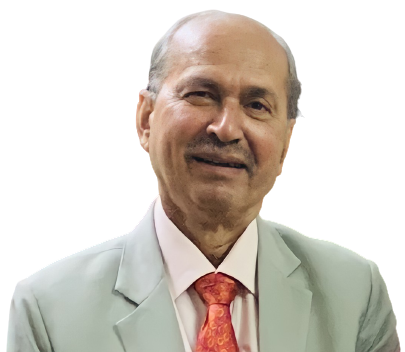









.jpg) Amid escalating West Asia tensions and Strait of Hormuz disruptions, External Affairs Minister S. Jaishankar delivered a sobering assessment of the global order at IIM Raipur’s 15th Convocation on April 4, 2026. “Everything today is being leveraged, if not actually weaponised,” he told graduates, citing the “triple shocks” of Covid-19, Ukraine-West Asia conflicts, and climate change as drivers of “structural turbulence.” He urged de-risking, diversification, and leveraging India’s resilience for “Viksit Bharat,” blending technology with tradition.
Amid escalating West Asia tensions and Strait of Hormuz disruptions, External Affairs Minister S. Jaishankar delivered a sobering assessment of the global order at IIM Raipur’s 15th Convocation on April 4, 2026. “Everything today is being leveraged, if not actually weaponised,” he told graduates, citing the “triple shocks” of Covid-19, Ukraine-West Asia conflicts, and climate change as drivers of “structural turbulence.” He urged de-risking, diversification, and leveraging India’s resilience for “Viksit Bharat,” blending technology with tradition.
Just days later, Iranian Ambassador Dr. Mohammad Fathali publicly praised India’s “strong diplomacy,” positioning New Delhi as a potential mediator and confirming special measures for safe passage of Indian vessels through the Hormuz Strait—critical for India’s energy imports. Reports on April 5-6 highlighted Indian-linked ships continuing transit despite volatility, underscoring quiet backchannel successes.
This episode captures India’s maturing geo-political playbook: pragmatic multi-alignment that avoids taking sides while safeguarding core interests—energy security for 10 million Gulf-based Indians and food supply chains. Speculation swirls that Delhi’s neutral-yet-firm stance could elevate its mediator credentials, especially as Trump-era pressures mount. The development signals a new trend: diplomacy as quiet leverage rather than loud rhetoric. As BRICS and other forums loom, Jaishankar’s message and Tehran’s nod reinforce India’s emergence as a stabilising force in a weaponised world—neither bystander nor belligerent, but indispensable balancer.
Send Feedback
- Five IAS officers get new assignments in UP (UPDATED)
- Tenure of Bishnu Charan Mallick as Director, Census, Rajasthan extended (UPDATED)
- Santanu Kumar Agrahari appointed as Director, NPPA (UPDATED)
- Rahul Pachori appointed as OSD to Jayant Chaudhary (UPDATED)
- Niraj Kumar Gayagi appointed as Joint Secretary, 8th CPC (UPDATED)
- Amit Satija appointed as Joint Secretary 8th CPC (UPDATED)
- Anil Kumar is also CMD, NDFDC (UPDATED)
- Vijyendra Kumar appointed as Joint Director, CBI (UPDATED)
- Tenure of Ms Lily Pandeya as Joint Secretary, Culture extended (UPDATED)
- Cabinet approves Investment Proposal for the construction of 1200 MW Kalai-II Hydro Electric Project (UPDATED)
- Ms Prachi Gangwar empanelled as Joint Secretary in GoI (UPDATED)
- Ms Deepa D Nair empanelled as Joint Secretary in GoI (UPDATED)
- H Raja Mohan empanelled as Joint Secretary in GoI (UPDATED)
- S Kulandivel empanelled as Joint Secretary in GoI (UPDATED)
- G Rajesh Kumar empanelled as Joint Secretary in GoI (UPDATED)
- S Senthil Kumar empanelled as Joint Secretary in GoI (UPDATED)
- G Muthuraja empanelled as Joint Secretary in GoI (UPDATED)
- S Gopal Krishna empanelled as Joint Secretary in GoI (UPDATED)
- D K Choudhary empanelled as Joint Secretary in GoI (UPDATED)
- Rajesh Prabhakar Patil empanelled as Joint Secretary in GoI (UPDATED)
- Gaurav Goyal empanelled as Joint Secretary in GoI (UPDATED)
- V Shanmugam empanelled as Joint Secretary in GoI (UPDATED)
- Hrishikesh B Yashod empanelled as Joint Secretary in GoI (UPDATED)
- Rohan Chand Thakur empanelled as Joint Secretary in GoI (UPDATED)
- Rathod Sandeep Rewaji empanelled as Joint Secretary in GoI (UPDATED)
- Priyanka Das empanelled as Joint Secretary in GoI (UPDATED)
- N Venkatesh empanelled as Joint Secretary in GoI (UPDATED)
- Gauri Parashar empanelled as Joint Secretary in GoI (UPDATED)
- A Muthu Kumar empanelled as Joint Secretary in GoI (UPDATED)
- Sumit Kumar Jarangal empanelled as Joint Secretary in GoI (UPDATED)
- S Tejaswi Naik empanelled as Joint Secretary in GoI (UPDATED)
- Saumya Agarwal empanelled as Joint Secretary in GoI (UPDATED)
- Kajal empanelled as Joint Secretary in GoI (UPDATED)
- Tenure of Dr Ajit Kumar Mohanty as Secretary, Atomic Energy extended (UPDATED)
- Vishvajit Sahay appointed as Secretary, Defence Finance (UPDATED)
- Sanjiv Shankar gets proforma promotion to CCIT grade (UPDATED)
- Ms Bhuvaneshwari appointed as Deputy Secretary, Coal (UPDATED)
- Four IRS-IT officers get postings after returning from deputation (UPDATED)
- Ms Umme Fardina Adil appointed as Deputy Secretary, Economic Affairs (UPDATED)
- Dr Sandeep Mittal appointed as DG, Armed Police & Vigilance, Anti-Corruption in Tamil Nadu (UPDATED)
- M Sai Kumar is new Chief Secretary, Tamil Nadu (UPDATED)
- Vibhu Goel appointed Additional CEO, West Bengal
- Six IAS officers in Haryana appointed as Assistant Commissioners
- Babul Barman posted as ADRM, Kharagpur
- Ms Shilpi Agarwal is also PFA (Con.), Northern Railway
- Mahesh Kumar posted as CWE, SER
- M Muni Kumar posted as ED/TD/COE, RDSO
- Mallela Srikant posted as Joint Director, Infra. & PPP, Railway Board
- World Bank is seeking Project Manager- HQ Real Estate Projects, US
- World Bank is seeking E T Consultant for South Sudan
- Rajeev Kumar accredited as High Commissioner to Solomon Islands
- IRCTC invites applications for Group General Manager, Corporate Office
- Applications to attend Core pre-deployment Training Materials course at Malaysian Peacekeeping Centre invited
- Candidates for 11 Asstt Dir, Chemical, MSME posts shortlisted
- NHSRC to fill Finance Controller, NHM post
- Applications for Addl Director of Enforcement Directorate post invited
- Punati Sridhar empanelled for appointment as IEM
- P C Pankaj has been empanelled for appointment as IEM
- A R Sihag & S Srivastava empanelled for appointment as IEMs
- M M Bhatia & M PJohnson empanelled for appointment as IEMs
- India Africa Forum Summit from May 28-31
- Indigenous 1,000-kg Heavy Bomb Project for IAF
- Ministry of Defence Signed Rs ,950 cr Contract With BEL
- Government Unlikely to Impose Curb on Sugar Exports
- PESB yet to hold interviews for CMD, Troop Comforts Ltd
- Dr Ranjay Choudhary selected as Director, IRFC
- Ms Rashmi joins the department of expenditure
- IRS officer to join Ministry of DoNER
- Centre Likely to Seek Revised Bids for IDBI Bank’s Strategic Sale
- RBI MPC Likely to Stay the Course as Growth Holds Firm; Geopolitical Risks Cloud the Outlook
- ED facing acute shortage of senior officers
- PMO and NITI Aayog Scouting Next Gen Leadership from Bureaucracy and Technocrats?
- Will Navy Chief be new CDS ?